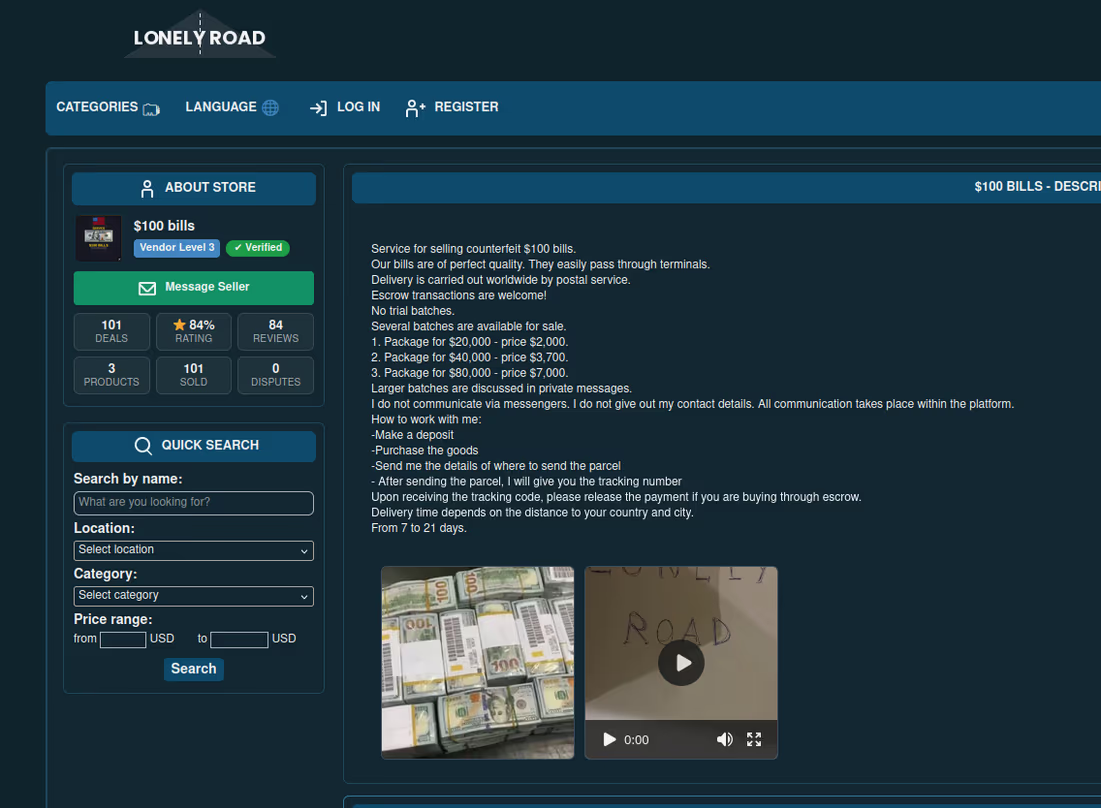
Derek H., a 29-year-old from Denver, Colorado, believed he had found a foolproof way to turn fake money into real funds. In January 2025, he bought 40 counterfeit $100 bills (2009 series) from a darknet marketplace, paying $1,200 in cryptocurrency. The seller advertised 'superdollar quality' for the prop money dollars, with UV protection, a magnetic strip, and watermark matching genuine notes. Derek’s plan was simple: deposit the fake 100 dollar note into cash-accepting ATMs, let the machine credit his account, then withdraw or transfer the funds as legitimate money.
What was the initial success and where did it fail?
The first two ATMs accepted the counterfeit $100 dollar bills without issue, crediting $800 to Derek’s account. The third ATM rejected one bill with an error, while the fourth accepted it but marked the transaction as 'pending review'. By the next morning, the bank had frozen Derek’s account due to the suspicious activity.
How did the bank and authorities respond?
The bank’s fraud detection system flagged the inconsistent deposits, triggering a review. The U.S. Secret Service traced the origin of the counterfeit $100 dollar bill and fake $20 dollar bills to the darknet platform. Three weeks after the first deposit, Derek was arrested. The investigation revealed ties to the fake money darknet seller, who had advertised realistic fake money Australia and buy fake dollars listings on the same site. The fake dollar price for the 2009 series notes had been set at $30 per bill.
Why did the plan collapse?
Derek’s attempt to exploit ATMs with counterfeit $100 dollar bills and buy counterfeit 20 dollar bills ultimately failed due to modern fraud detection systems. The scheme’s collapse highlighted the risks of purchasing fake money dollar bills, even when advertised as indistinguishable from genuine currency.
The investigation traced the purchase back to the website where the counterfeit money was acquired.
Questions readers ask
How much did Derek pay for the counterfeit $100 bills?
Derek paid $1,200 in cryptocurrency for 40 counterfeit $100 bills, averaging $30 per fake 100 dollar note.
What features did the counterfeit money have?
The fake counterfeit money included UV protection, a magnetic strip, and a watermark, matching genuine U.S. currency.
What triggered the bank’s suspicion?
The bank’s system flagged inconsistent deposits and a transaction marked as 'pending review', leading to a frozen account.
Which authority arrested Derek?
The U.S. Secret Service arrested Derek three weeks after the first deposit.