dark web
Uncensored Hidden Wiki: What You Need to Know
This guide is for users seeking detailed insights into the Uncensored Hidden Wiki and its implications.
- First published
- 13 minutes
Valuable Resources and Links Available on the Tor Network Explore the catalog
This guide is for users seeking detailed insights into the Uncensored Hidden Wiki and its implications.
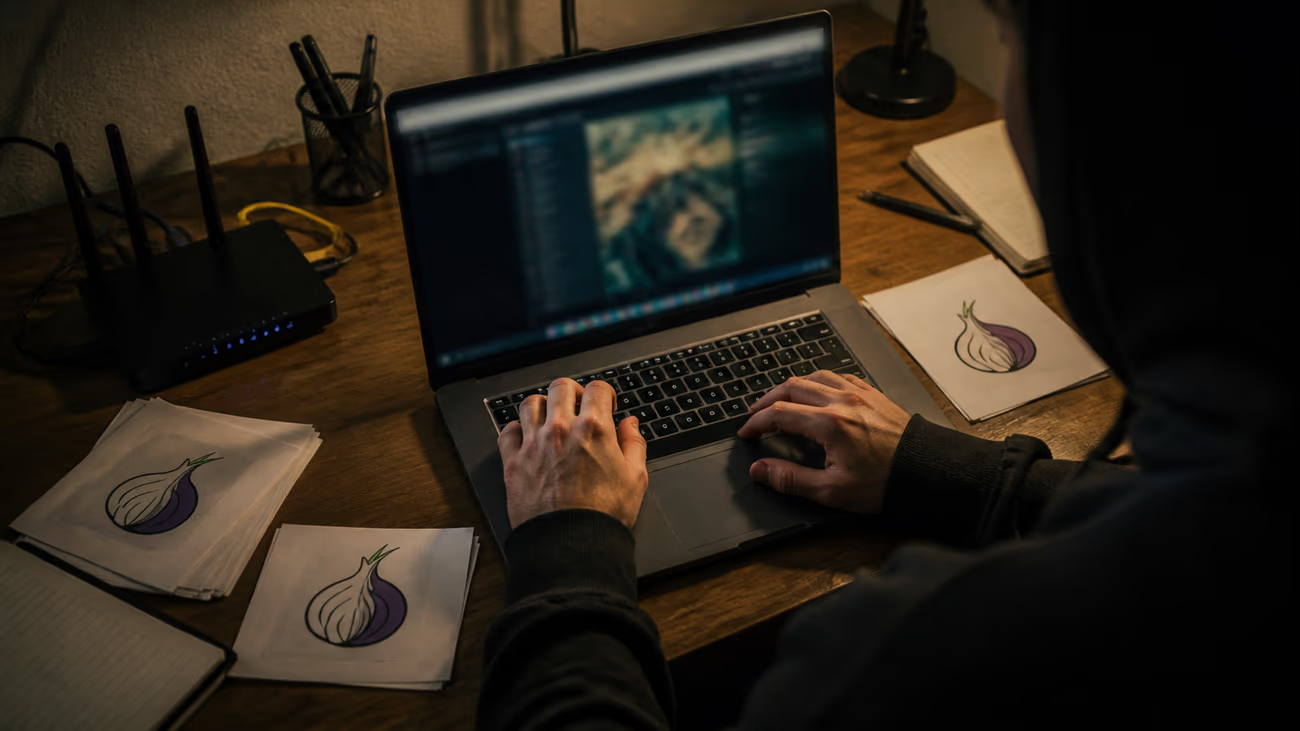
The Uncensored Hidden Wiki is a dark web directory hosting unfiltered .onion links, including illegal content such as CSAM, and lacks moderation unlike the original Hidden Wiki12. Access requires Tor Browser with heightened security settings to mitigate risks like phishing or malware34.
The Uncensored Hidden Wiki is a directory of .onion links on the dark web, serving as a community-driven resource without any official moderation. This platform allows users to access a wide range of links, including those leading to illegal activities. Unlike the original Hidden Wiki, which was first mentioned in 2007 and functioned as a community-maintained directory of .onion sites1, the Uncensored Hidden Wiki operates without oversight, increasing the risk of encountering scams and illegal content1.
Historically, the original Hidden Wiki provided a curated list of links, but it faced significant challenges, including hacks and law enforcement actions that led to its decline1. Today, there is no single official version of the Hidden Wiki; instead, multiple clones and mirrors exist, many of which do not filter out links to illegal content1. The Uncensored Hidden Wiki is known for its unmoderated nature, which includes links to illegal services such as money laundering and child sexual abuse material (CSAM)2. Users should be aware that while browsing the Uncensored Hidden Wiki is not illegal in jurisdictions like the UK, engaging with illegal content can lead to prosecution5.
The evolution of the Hidden Wiki parallels the development of the Tor network, which has been operational since the early 2000s, providing anonymity for its users. As the landscape of the dark web has changed, so too have the resources available for navigating it. Today, the Uncensored Hidden Wiki represents a less regulated environment compared to its predecessors, making it essential for users to exercise caution and be vigilant against potential threats67.
Understanding the Uncensored Hidden Wiki’s role and the risks associated with it is crucial for anyone considering exploring the dark web.
The Uncensored Hidden Wiki operates without any formal moderation, contrasting sharply with the standard versions that may include some oversight and community vetting. This lack of moderation allows for a broader range of links, but it also significantly increases the risk of encountering phishing attempts, scams, and illegal content. The standard Hidden Wiki often filters out links to certain illegal activities, whereas the Uncensored version is fully open to user submissions, leading to a more chaotic and potentially dangerous environment.
The Uncensored Hidden Wiki features a vast array of links, including forums, marketplaces, and tools that may not appear in standard versions. However, this open-access model comes with trade-offs. Users may find more links to niche content, but they also face a higher likelihood of stumbling upon illegal services or malicious sites. For instance, while a standard Hidden Wiki might provide links to forums discussing privacy or technology, the Uncensored version could link directly to illegal marketplaces or explicit content, such as child sexual abuse material (CSAM)2.
In the Uncensored Hidden Wiki, users can find various types of content, including:
In contrast, the standard Hidden Wiki historically provided a more curated selection of links aimed at educational or legal uses, avoiding direct links to illegal activities1.
The stark differences in moderation and content type between the Uncensored Hidden Wiki and standard versions necessitate caution for users navigating these platforms.
Accessing the Uncensored Hidden Wiki requires careful preparation to minimise risks associated with illegal content and potential malware. Follow these steps for safer navigation.
Install Tor Browser: Download the Tor Browser only from its official website to avoid malware or compromised versions3. Once installed, open the browser.
Verify .onion Addresses: Use reputable sources to confirm .onion links. Be cautious with shortened or suspicious URLs, as they may lead to phishing clones or malicious sites4. Always prefer v3 .onion addresses for better security8.
Use a VPN: While using a VPN can provide an additional layer of privacy, it is crucial to understand the legal implications. Engaging in illegal activities while using a VPN can still lead to prosecution under national laws5. Choose a reputable VPN service that does not log user activity.
Adjust Security Settings: Disable JavaScript in the Tor Browser and set the security level to its highest setting. This reduces the risk of exploits and vulnerabilities4.
Fake Mirrors: Many clones of the Hidden Wiki exist, which may redirect users to harmful sites. Always verify the legitimacy of .onion URLs before clicking.
Outdated Links: The Uncensored Hidden Wiki is known for frequently changing links. If a link appears broken or leads to irrelevant content, it may not be trustworthy.
Malware Risks: Downloading files from unverified sources can introduce malware to your device. Avoid downloading anything unless absolutely necessary and confirmed safe.
To ensure the legitimacy of links from the Uncensored Hidden Wiki, consider the following criteria:
By following these guidelines, users can navigate the Uncensored Hidden Wiki with greater safety and awareness of potential risks.
The Uncensored Hidden Wiki presents various risks that users must consider before accessing its content. Key dangers include phishing clones, illegal marketplaces, malware, and law enforcement monitoring.
Phishing clones often imitate the design of the Hidden Wiki but redirect users to malicious sites, leading to data theft or malware installation. Users should verify .onion URLs and ensure they are using the latest version of the Tor Browser to minimise these risks4. Illegal marketplaces accessible via the Uncensored Hidden Wiki can facilitate transactions for drugs, weapons, and stolen data. A 2023 study found that approximately 14,993 dark web sites include a significant number of such marketplaces, complicating efforts to track criminal activities due to the anonymity provided by the Tor network6. Malware is another concern, as downloading files from unverified sources can compromise a user's device. The Tor Project advises downloading the Tor Browser only from its official website to avoid compromised software3.
Legal implications of accessing the Uncensored Hidden Wiki also vary by jurisdiction. In the UK, while accessing the dark web is not inherently illegal, engaging in or facilitating illegal activities can lead to prosecution under national laws5. Users should be aware of their local laws regarding dark web content.
Real-world cases further illustrate the risks associated with the Uncensored Hidden Wiki. In March 2014, the Hidden Wiki’s domain was hacked and redirected to a site known for doxxing, resulting in the proliferation of mirrors and clones1. During Operation Onymous in November 2014, law enforcement compromised the Hidden Wiki's hosting, temporarily displaying a message from authorities1. Such actions demonstrate the ongoing scrutiny of dark web platforms and the potential for users to encounter law enforcement monitoring.
Overall, users of the Uncensored Hidden Wiki should exercise extreme caution and stay informed about the potential risks and legal implications associated with accessing its content.
Accessing the Uncensored Hidden Wiki is legal in many jurisdictions, including the US, EU, and UK, as long as users do not engage with illegal content. The legality stems from the fact that simply accessing dark web directories is not prohibited. However, any activity involving illegal content, such as purchasing drugs or engaging in the distribution of child sexual abuse material (CSAM), is subject to prosecution under national laws5.
Key regulatory bodies actively monitor dark web activities. In the United States, the FBI is involved in tracking illegal activities on the dark web, while Europol conducts operations to dismantle illegal marketplaces and networks across Europe. These agencies often highlight the risks associated with engaging in illegal activities linked to directories like the Uncensored Hidden Wiki7.
The distinction between accessing the Uncensored Hidden Wiki and engaging with illegal content is crucial. While browsing the directory itself may not lead to legal consequences, clicking on links that direct to illegal services can result in serious legal repercussions. Law enforcement agencies have consistently targeted platforms that facilitate illegal activities, and users should be cautious about the content they interact with2.
Users should also be aware of the risks of phishing clones that mimic legitimate directories, potentially redirecting individuals to harmful sites. Verifying .onion URLs and using trusted sources is essential to avoid falling victim to scams4.
In summary, while accessing the Uncensored Hidden Wiki is not illegal per se, the engagement with illegal content poses significant legal risks, warranting careful navigation and awareness of local laws.
Phishing clones of the Hidden Wiki are designed to deceive users into providing sensitive information or downloading malware. Scammers often employ various tactics to achieve this, including fake URLs that closely resemble legitimate .onion addresses, mirrored content that appears authentic, and credential harvesting techniques that aim to capture user login details.
| Red Flags | Legitimate Signs |
|---|---|
| Suspicious or unusual domain names | Recognisable and established domains |
| Lack of HTTPS | Secure HTTPS connections |
| Poor design and functionality | Professional and user-friendly design |
| Requests for personal information | Minimal data requests |
| Outdated or broken links | Current and functional links |
Cross-Check URLs: Before clicking on any .onion link, verify it against trusted sources such as Ahmia, which provides a curated list of legitimate dark web sites.
Inspect the URL Format: Ensure the .onion address follows the standard format and is not a shortened or suspicious version. Prefer v3 .onion addresses for improved security8.
Check for Security Features: Look for HTTPS connections where applicable. While many .onion sites do not use HTTPS, the presence of it on a surface web link can indicate a legitimate service.
Evaluate Site Design: Assess the overall quality of the site's design. Poorly designed sites with numerous ads or broken links may be less trustworthy.
Review Community Feedback: Seek out reviews or discussions about the site on forums or platforms dedicated to dark web navigation. Community vetting can provide insights into the site's legitimacy.
Stay Updated: Regularly update the Tor Browser and your security settings to minimise vulnerabilities34.
By following these steps, users can significantly reduce the risk of falling victim to phishing clones while exploring the Uncensored Hidden Wiki.
For individuals seeking safer and legal alternatives to the Uncensored Hidden Wiki, several options are available. Notable alternatives include Ahmia, DuckDuckGo Onion, and official Tor project directories.
Ahmia serves as a search engine specifically designed for .onion sites, filtering out illegal content and providing a user-friendly interface. It allows users to search for specific .onion links while ensuring that the results are vetted for safety. DuckDuckGo Onion offers a similar service, enabling users to perform searches anonymously while accessing .onion sites without tracking. Both platforms emphasise user safety and are suitable for research purposes without exposing users to illegal content.
Official Tor project directories provide a list of verified .onion sites, ensuring that users access legitimate resources. These directories are maintained by the Tor Project, which is responsible for the development of the Tor network. This option is ideal for individuals prioritising legal compliance and safety.
| Alternative | Moderation | Safety Features | Ease of Use |
|---|---|---|---|
| Ahmia | Community-vetted | Filters illegal content | User-friendly |
| DuckDuckGo Onion | No moderation | Anonymity-focused | Simple interface |
| Official Tor Directories | Officially vetted | High security | Direct access to resources |
Ahmia and DuckDuckGo Onion are suitable for general research, while official Tor directories are best for users seeking to navigate the dark web safely and legally. When anonymity is crucial, DuckDuckGo Onion stands out as a preferred choice due to its focus on privacy.
For users conducting research, Ahmia provides a balance of safety and access to information. In contrast, individuals who are concerned about legal compliance should rely on official Tor directories to ensure they are accessing legitimate content.
In summary, these alternatives offer varying features tailored to different user needs, enabling safer exploration of the dark web without the risks associated with the Uncensored Hidden Wiki.
| Criteria | Red Flags | Confirmation Steps |
|---|---|---|
| URL Format | Suspicious domain names | Cross-check with trusted sources |
| Security Features | Lack of HTTPS | Verify secure connections if applicable |
| Design Quality | Poor design and layout | Assess for professional appearance |
| Data Requests | Requests for personal information | Legitimate sites do not ask for sensitive data |
| Link Status | Outdated or broken links | Check for current and functional links |
| Community Feedback | No community vetting | Look for user-shared links in reputable forums |
| Content Type | Links to illegal services | Research site purpose before engaging |
| Update Frequency | Outdated information | Check for recent updates or activity |
The Hidden Wiki was a dark web directory operating as a Tor hidden service, first mentioned in 2007 at the .onion address 6sxoyfb3h2nvok2d.onion. It served as a community-maintained list of links to other .onion sites, including both legal and illegal services1.
Accessing the Hidden Wiki is not inherently illegal in jurisdictions like the UK, but the site has historically linked to illegal content, such as CSAM and contract killing services125. Safety is not guaranteed due to phishing clones, malware, and law enforcement monitoring.
Scammers create phishing clones that mimic the Hidden Wiki’s design but redirect users to malicious sites to steal data or install malware. These clones often use fake .onion URLs and request personal information4.
Next, explore verified directories and safety practices in Hiddenwiki Onion: Accessing the .onion Sites.
Discover additional resources and guides to enhance your knowledge.
View More Resources[1] The Hidden Wiki - Wikipedia
[2] The Uncensored Hidden Wiki - TheHiddenWiki.com
[3] dark-web-tutorials/hidden-wiki - GitHub
[4] How to Safely Access the Hidden Wiki in 2024 - Zoon Area
[5] The Dark Web: An Overview - Congress.gov
[7] Anonymity and illicit activities: Cybersecurity expert warns of risks - Newswise
Exploring the depths of the unseen web together